Better marketing
saves dogs
Companies invest billions in marketing - because it works!
Giving shelters and rescues the same marketing tools and strategies maximizes every dog's visibility to connect them with potential adopters.
We believe the greatest impact comes from focusing on the dogs and finding them loving homes.
Better Together For Dogs is dedicated to helping shelter and rescue dogs to get seen. Because when dogs find loving homes, kennels open up and staff and volunteers have more time for the animals still waiting, resources are used more effectively, and shelters become calmer and more sustainable.
$700B+
Spent globally on marketing each year
2.3x
More engagement on posts with quality visuals
7x
Higher reach with multi-channel advertising vs. single channel
The power of Marketing.
How Marketing gets dogs in homes.
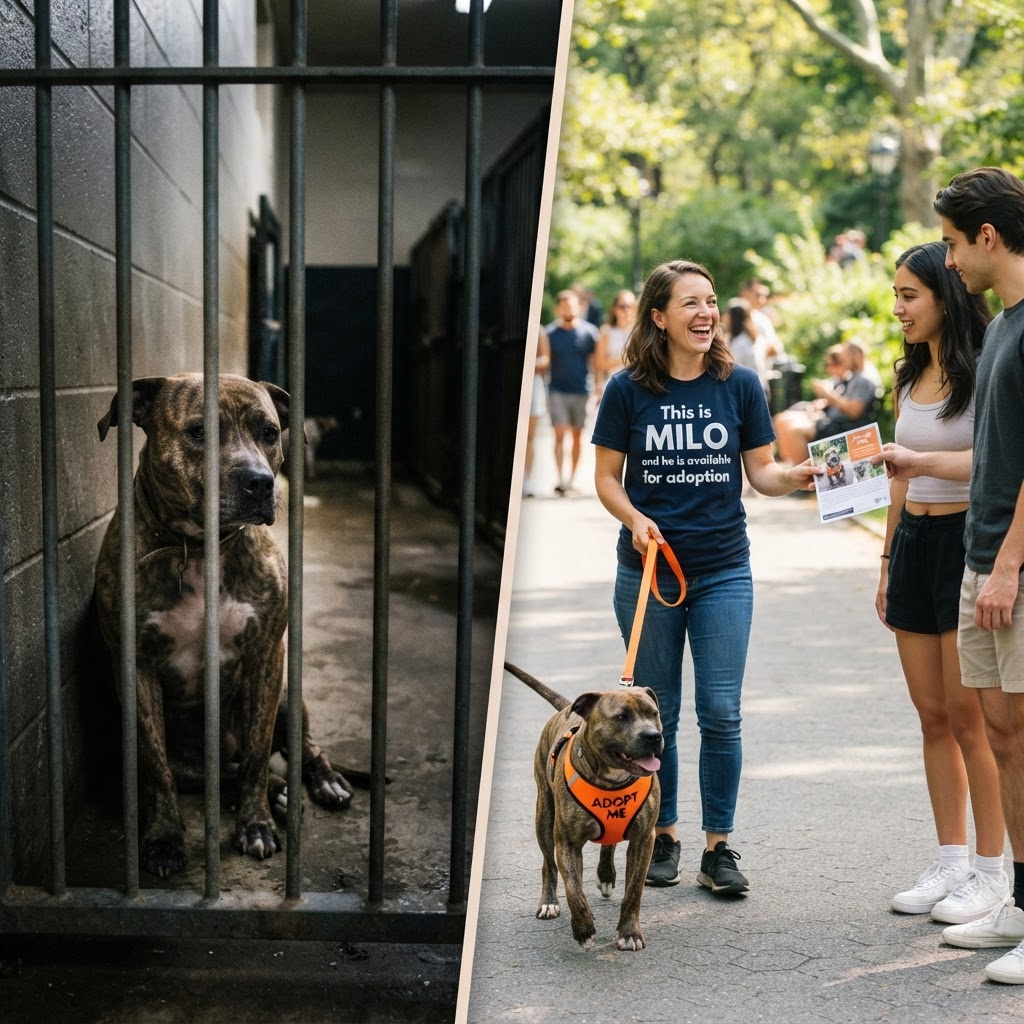
As difficult as it may sound, a shelter dog is often viewed like a second-hand product — one with a history, and sometimes a few scratches from life. Incredible rescue dogs are overlooked, because they are competing with the new products flooding the market.
Good marketing shifts the focus from some "imperfections" to what truly matters: personality, companionship, and potential. It captures the gentle eyes, the loyal heart, the playful spirit, the charming confidence, or the funny little habits that make each dog unique. When people connect emotionally, they stop seeing a dog as a life style product and start seeing a companion for their future.
Change the impression of 'used and damaged' to 'worth it and lovable'!
360° Advertising
Social media posts alone aren't enough in today's highly saturated market. Use a full mix of advertising channels! From the classic marketing mix to guerrilla marketing — we need to go 'all in'.
Professional visuals
Dogs with high-quality photos and videos draw more interest. Eye-level shots, capturing their personalities and displaying them in different environments and situations make all the difference.
Visibility in Public
Getting dogs out into the community — at events, on walks, at local businesses — is one of the most effective ways to attract adopters. Face-to-face exposure creates personal connections that online listings alone cannot match.
Compelling Bios
Data shows that narrative-driven bios with specific details about a dog's personality get 2x more inquiries than generic descriptions.
The shift good marketing makes
Overlooked
Lovable
Good marketing reframes a shelter dog — from overlooked to lovable.
5 things you can start today.
Tell a story, not a listing
Describe the dog's quirks, favorite activities, and the kind of home they'd thrive in. Make people imagine life with them.
Use natural light always
Photograph dogs outdoors or near large windows. Avoid flash — it washes out features and makes dogs look less approachable.
Post consistently, not perfectly
A genuine photo and caption posted regularly outperforms a polished post shared once a month. Consistency builds trust.
Tag and collaborate
Partner with local businesses, influencers, and foster families. Every share extends your reach exponentially at zero cost.
Include a clear call to action
Always tell people what to do next — 'Apply to adopt', 'Share this post', 'Meet them this Saturday'. Clarity drives results.
How's your marketing presence?
Honestly check off what your rescue or shelter is already doing. See where you stand and discover actionable tips for each item.
Valuable marketing resources for shelters.
Guides and research compiled by animal welfare experts to help your organization market more effectively.
What are we even talking about?
Your insights help us understand what the rescue community really needs. Each poll takes about 2 minutes.
Conduct your own surveys.
These platforms let you create professional surveys and polls to gather insights from your community, adopters, or volunteers.
Guerilla Marketing.
Guerilla marketing uses unconventional, low-cost, and creative tactics to grab attention in unexpected places. Instead of relying on paid ads, it leverages surprise, emotion, and public spaces to create memorable experiences that people talk about and share organically. For animal rescue, it's one of the most powerful — and affordable — ways to get dogs noticed.
Sidewalk Chalk Campaigns
Write adoption messages and dog profiles with chalk on busy sidewalks, near dog parks, or outside coffee shops. Include a QR code linking to your adoption page. Low cost, high visibility.
Pop-Up Adoption Events
Set up in unexpected locations — farmers markets, brewery patios, bookstores, or community festivals. When people aren't expecting to meet a dog, the surprise creates emotional connections that planned visits rarely match.
Doggy Care Packages in Public
Leave branded bags with treats, toys, and adoption flyers on park benches or outside pet stores. People who find them feel a personal connection to your cause — and share the experience on social media.
Street Art & Murals
Commission or create murals featuring adoptable dogs in high-traffic areas. A beautiful, photo-worthy mural becomes a landmark — and free advertising every time someone takes a selfie in front of it.
Vehicle Wraps & Magnets
Turn foster parent cars into mobile billboards with magnetic 'Adopt Me!' signs featuring the dog they're currently fostering. Every trip to the grocery store becomes an adoption ad.
Photo Booth at Events
Set up a free photo booth at local events with adoptable dogs as the 'models'. People take photos, share them online, and your dogs get exposure to hundreds of new potential adopters.
When gastronomy meets rescue.
One of the most creative guerilla marketing strategies is combining food culture with animal rescue. Restaurants and cafes that integrate rescue dogs into their concept create a unique dining experience that attracts customers who care — and turns every meal into an opportunity for adoption awareness.
Darbster Bistro
A plant-based restaurant that doubles as a rescue advocacy hub. By weaving animal welfare into their brand identity — from menu messaging to community events — they attract diners who share their values. Every customer becomes a potential adopter, donor, or volunteer. The restaurant itself is a living advertisement for rescue.
Visit on Facebook →Stray Café by Rockstar Rescue
A café concept by Rockstar Rescue that brings rescue dogs directly into a cozy café setting where visitors can interact with adoptable animals while enjoying coffee and food. It removes the intimidating shelter environment and replaces it with a warm, social atmosphere — making adoption feel natural and joyful rather than transactional.
Visit on Facebook →The takeaway: Guerilla marketing works because it meets people where they already are — in cafes, on sidewalks, at festivals — rather than asking them to come to you. When done right, it turns everyday moments into adoption opportunities.
Market Research results.
What the published research says about the people who foster and adopt rescue dogs — and which dogs get chosen, which get overlooked, and why. Use it to aim your marketing at the audience that is actually looking.
Who fosters
- Fosters skew female (roughly 80–90% of foster caregivers in shelter program data), 25–55 years old, and are often already pet owners.
- Two dominant motivations: saving a life ("I can help one more dog get out") and wanting dog company without permanent commitment.
- Many are "trial adopters": a large share of first-time fosters end up adopting (foster-fail rates of roughly 20–30% are commonly reported by rescues).
- Biggest barriers named in research: fear of grief at hand-over, uncertainty about costs, lack of clear support, and worry about their own resident pets.
- Short, clearly-scoped commitments (weekend/2-week "field trips" and slumber parties) recruit far more new caregivers than open-ended asks.
Who adopts
- Adopter households cluster in two groups: families with school-age children looking for a friendly, sturdy, kid-safe dog, and adults 45+ (including empty-nesters and retirees) looking for a calm, lower-energy companion.
- Behaviour and personality outrank breed: adopters consistently rate temperament, friendliness and "gets along with my household" as the top decision factors, above breed or looks.
- Convenience decides who even visits: distance to the shelter, opening hours, adoption fee, and how fast an application is answered are repeatedly the strongest predictors of adoption.
- Most adopters start online. The photo and the first two sentences of the bio decide whether a dog is clicked at all — dogs with several good photos and a warm, specific story get significantly more inquiries.
- Adoption fees and waived-fee events don't lower adopter commitment: follow-up studies find no difference in attachment or retention between fee-waived and fee-paid adoptions.
Which dogs get fostered and adopted — and which don't
- • Puppies and dogs under ~2 years
- • Small dogs (under ~25 lbs / 12 kg)
- • Fluffy, "cute"-coded and popular breeds
- • Purebreds and recognisable mixes
- • Dogs described as good with kids, dogs and cats
- • House-trained, leash-trained, low-maintenance dogs
- • Adults 2–7 and seniors 7+
- • Large and extra-large dogs
- • Black dogs and blocky-headed bully-type dogs ("pit bull" labelled)
- • Dogs with medical needs or visible scars
- • Shy, fearful, reactive or high-energy dogs
- • Long-stay dogs whose listing has gone stale
Key findings you can act on
Breed labels change outcomes
When shelters removed breed labels from kennel cards and listings, adoptions of "pit-bull-type" dogs rose and their length of stay fell sharply — the label, not the dog, was the deterrent (Gunter et al., 2016; Arizona State University).
Photos and stories drive clicks
Listing experiments repeatedly show that a sharp, well-lit photo of the dog looking at the camera, plus a story-style bio written in the dog's voice, increases inquiries several-fold over a dark kennel photo and a data sheet.
Fostering shortens length of stay
Dogs who spend time in foster homes get better behaviour information, better photos and video, and more human advocates — and are adopted faster than comparable dogs who stay in kennels. Even one- or two-night outings measurably lower stress hormones.
Long-stay dogs need a different pitch
For dogs overlooked past a few weeks, the winning approach in shelter case studies is repositioning, not repetition: a new photo set, a new headline trait, a named "quirk", and an offer of a trial foster instead of a straight adoption.
Return rates are low
Most adoptions hold: national data puts post-adoption returns at roughly 5–10%, with the most common reasons being unexpected behaviour issues and housing or landlord problems — both addressable with honest, specific advertising up front.
Share your thoughts
The photography tutorials were a game-changer. Our adoption photos look so much more professional now.
We used the Ad Builder to create profiles for 15 dogs last week. The download quality is amazing.

